A slow shower, a gurgling toilet, a smelly gully in the backyard. If you live in Killarney Vale, you have probably dealt with at least one of them. Blocked drains are one of the most common jobs we get called to, and because we are based right here in Killarney Vale, we see the same causes come up again and again.
The short answer: most blocked drains in Killarney Vale are caused by tree roots getting into older clay sewer pipes, wet wipes and grease building up inside the pipe, and leaves and sand washing into stormwater drains during heavy rain. Broken or sagging pipes, hair and soap scum, and things that should never be flushed make up most of the rest.
Below we explain each cause, the warning signs to watch for, what you can safely try yourself, and when it is time to call a local plumber.
Why drains in Killarney Vale block so often
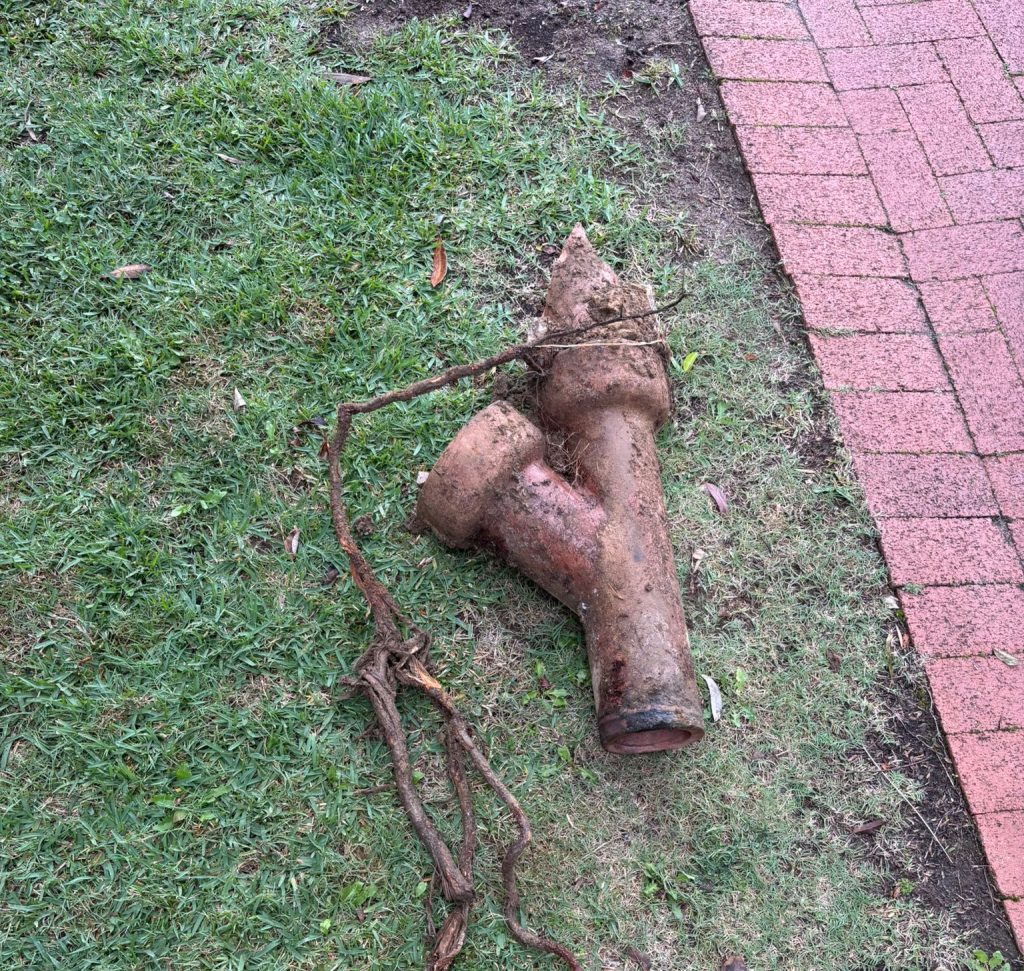
Killarney Vale sits between Tuggerah Lake and Bateau Bay, with Long Jetty and Berkeley Vale next door. Much of the suburb was built as it grew through the 1960s and 1970s, when clay pipes (often called terracotta pipes) were the standard for household sewer lines. Clay pipes were laid in short lengths, and every joint becomes a weak spot as the pipe ages.
Three local conditions make blockages more likely here:
- Older clay sewer lines with lots of joints that crack and shift over time
- Big, established trees in local backyards whose roots go looking for water
- Heavy coastal downpours that wash leaves, sand and garden mulch into stormwater drains
Put those together and you get drains that block, clear, then block again. If that sounds like your place, our guide on why drains keep getting blocked on the Central Coast goes deeper on repeat blockages.
7 common causes of blocked drains in Killarney Vale
1. Tree roots in old clay pipes
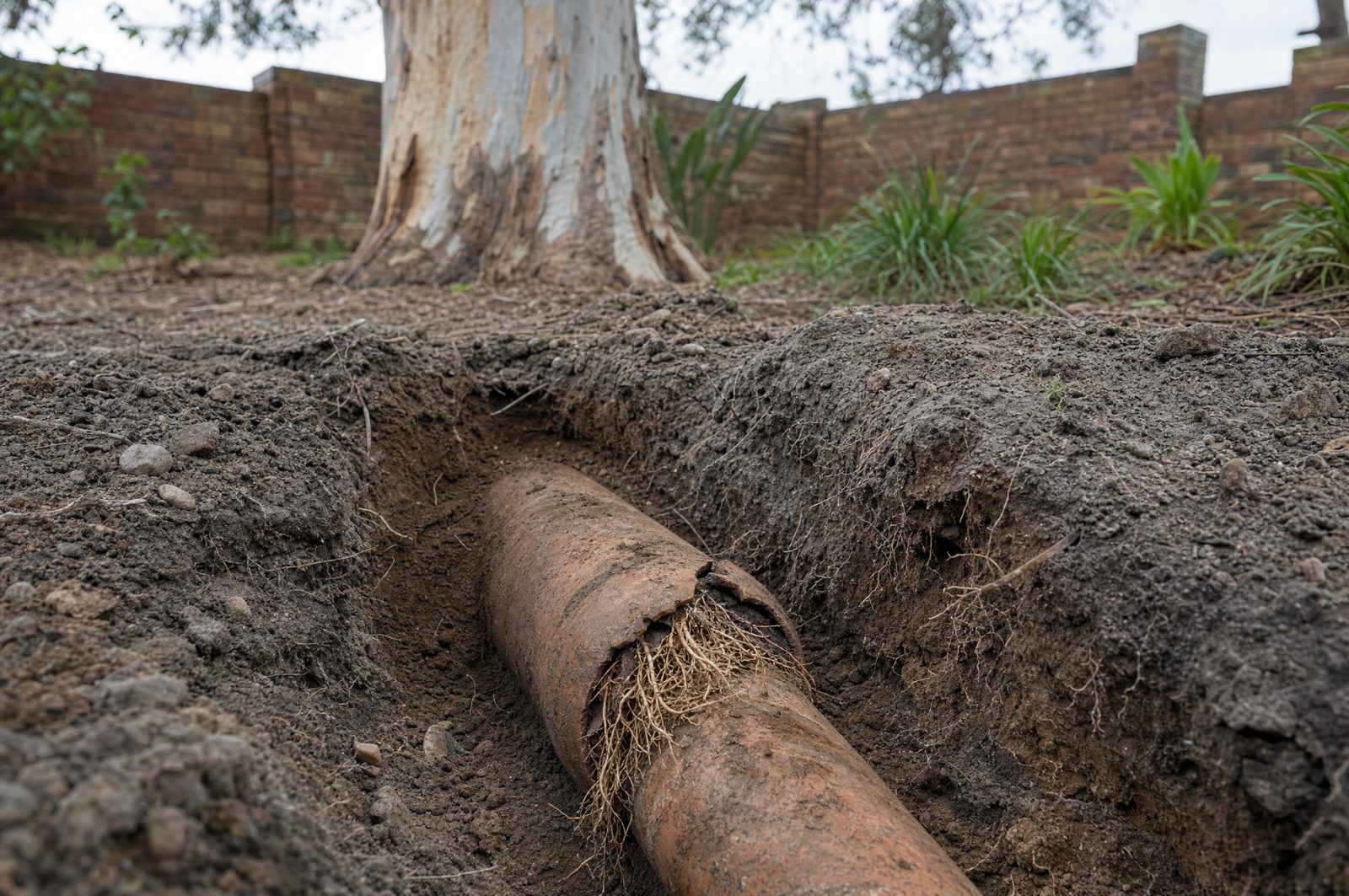
Tree roots are the most common cause of serious sewer blockages we clear. Roots are drawn to the water and nutrients inside your sewer line. They find a tiny crack or a loose joint, grow inside, and spread into a thick mat that catches toilet paper and waste. Once roots are in the pipe, they keep growing back until the damaged section is repaired.
The giveaway is several fixtures slowing down at once, often with gurgling and an overflowing outdoor gully. We explain how to protect your pipes in how to prevent tree roots from damaging your pipes.
2. Wet wipes and sanitary products
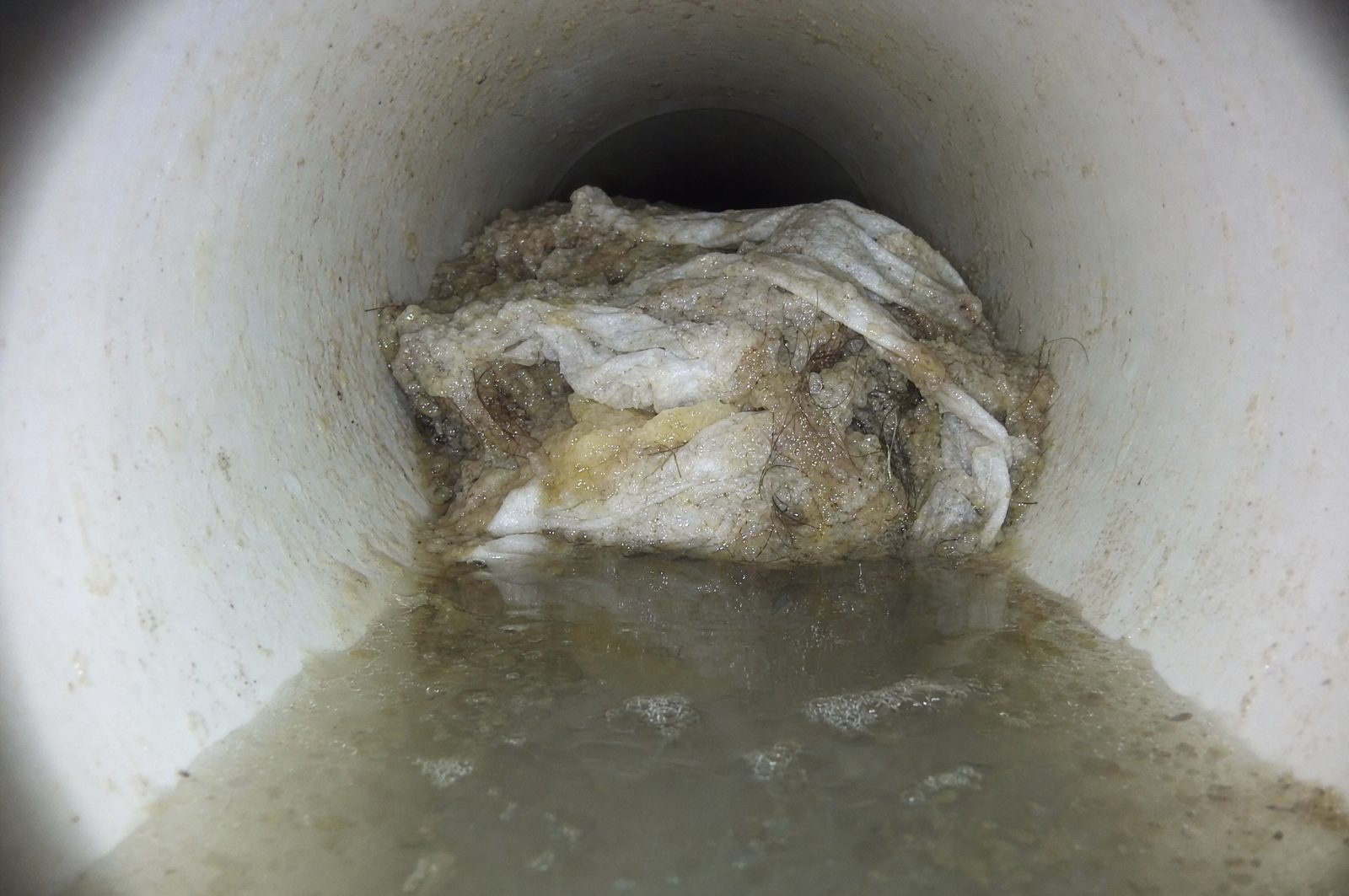
Plenty of wipes say “flushable” on the packet, but they do not break down like toilet paper. They snag on rough joints and roots, then build up into a solid plug. Central Coast Council also asks residents to keep wipes out of the sewer, because they block the public mains too. The simple rule: only pee, poo and toilet paper go down the toilet.
3. Fat, oil and grease
Hot fat pours down the sink easily, then cools and sets hard inside the pipe. Over months it coats the pipe wall, narrows it, and grabs food scraps along the way. A kitchen sink that drains slowly, smells, or backs up into the dishwasher is usually this. Wipe greasy pans with paper towel and put it in the bin, and keep a jar for used cooking oil.
4. Hair and soap scum
Bathroom blockages build slowly. Hair binds with soap scum and conditioner into a sticky clump in the shower waste or basin trap, and the water starts pooling around your feet. A cheap hair catcher over the shower drain stops most of it before it starts.
5. Leaves, sand and storm debris
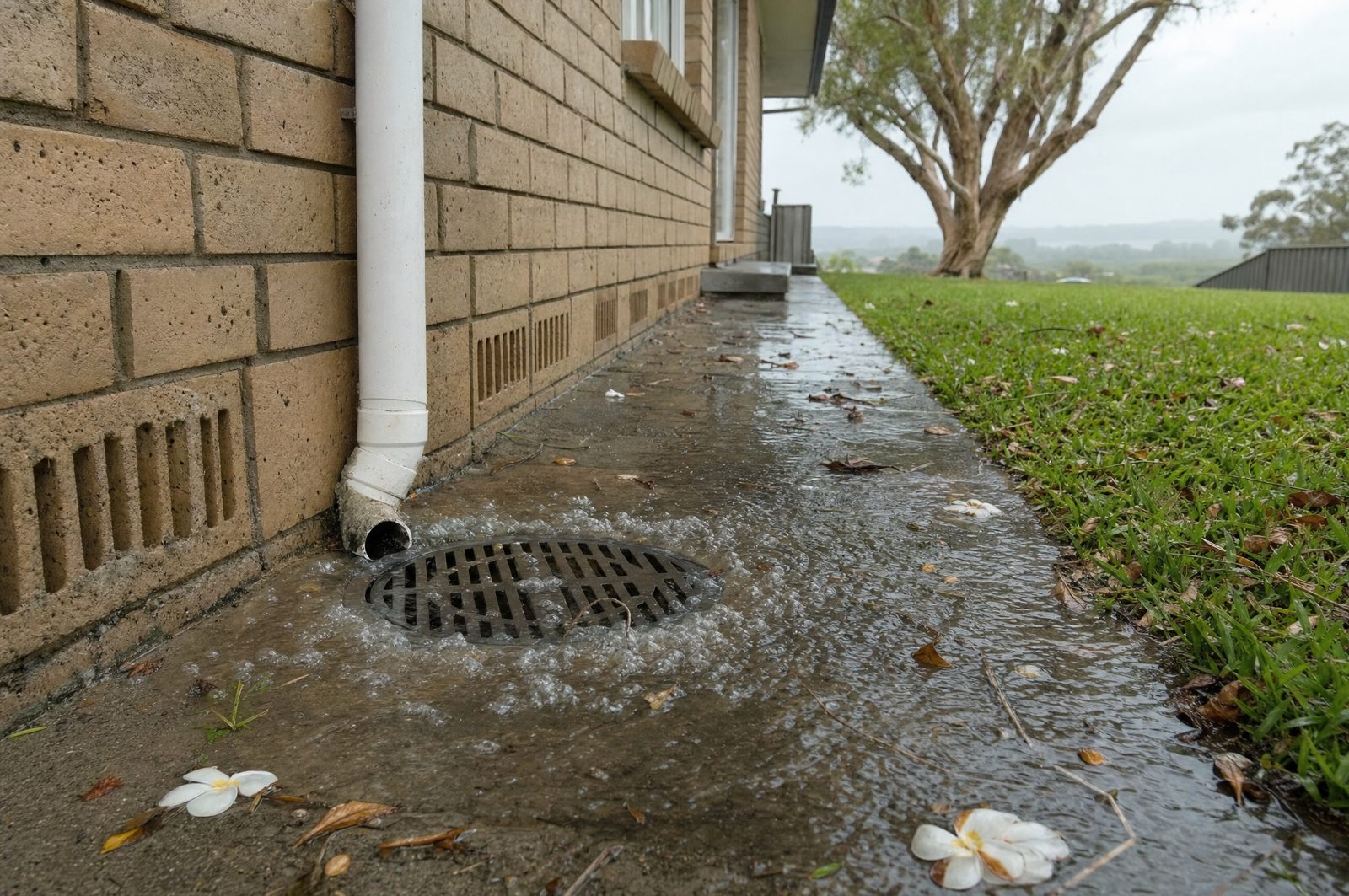
Stormwater drains carry rain from your roof and yard, not sewage. In a big coastal storm, leaves from the gutters, sand and garden mulch wash into downpipes and stormwater pits and settle in the pipes. Next time it pours, the water has nowhere to go and pools around the house. Clean your gutters before storm season and keep mulch and sand away from grates and pits.
6. Broken, cracked or sagging pipes
Over the decades, ground movement, tree roots and heavy vehicles can crack a pipe or push it out of line. A section can sag and form a low spot (plumbers call it a belly) where waste settles and builds up. Old clay pipes are more prone to this than modern PVC. If a drain keeps blocking after it has been cleared, a damaged pipe is the likely reason, and a CCTV drain inspection will show exactly where it is and how bad it is.
7. Things that should never go down a drain
Some blockages are simply the wrong thing in the wrong pipe. These are the usual suspects we pull out:
- Cotton buds, dental floss and cotton pads
- Paper towel, tissues and too much toilet paper in one flush
- Food scraps, coffee grounds and rice
- Cat litter
- Kids’ toys (yes, really)
Warning signs your drain is starting to block
Most drains give you a warning before they block completely. Watch for:
- Water draining slowly from the sink, shower or bath
- Gurgling when you flush or run a tap
- Sewer smells inside the house or around the yard
- Water rising or overflowing at the outdoor gully
- More than one fixture playing up at the same time, which points to the main sewer line (see blocked toilet vs blocked sewer line)
- Soggy patches or unusually green grass over where the sewer line runs
Acting at the first sign is almost always easier and cheaper than waiting for a full blockage.
Is the blockage your responsibility or Council’s?
Central Coast Council looks after the public sewer mains. Under Council’s rules, every property owner is responsible for sewer blockages on their own premises, between the house and the point where your line joins Council’s sewer (the junction).
If you see sewage overflowing from a Council manhole, or you think the blockage is in the Council main, report it to Central Coast Council straight away on 02 4306 7900. Not sure which side of the junction it is on? A camera inspection answers that quickly and shows you exactly where the blockage sits.
What you can safely try before calling a plumber
- Use a plunger on sinks, showers and toilets. Cover the overflow hole on a basin first so the pressure goes down the pipe.
- Run very hot tap water down a greasy kitchen sink to soften a light build-up.
- Pull hair out of the shower waste with gloves or a cheap drain hair tool.
- Clear leaves and debris off outdoor grates, and keep pots and objects off the top of your gully.
We do not recommend caustic chemical drain cleaners. They can damage older pipes, burn your skin, and they rarely shift roots or wipes. For more simple fixes, see our guide on how to clean blocked drains. If the blockage comes back within a few weeks, stop there. Repeat blockages mean something is inside the pipe that DIY will not fix.
How we clear blocked drains in Killarney Vale
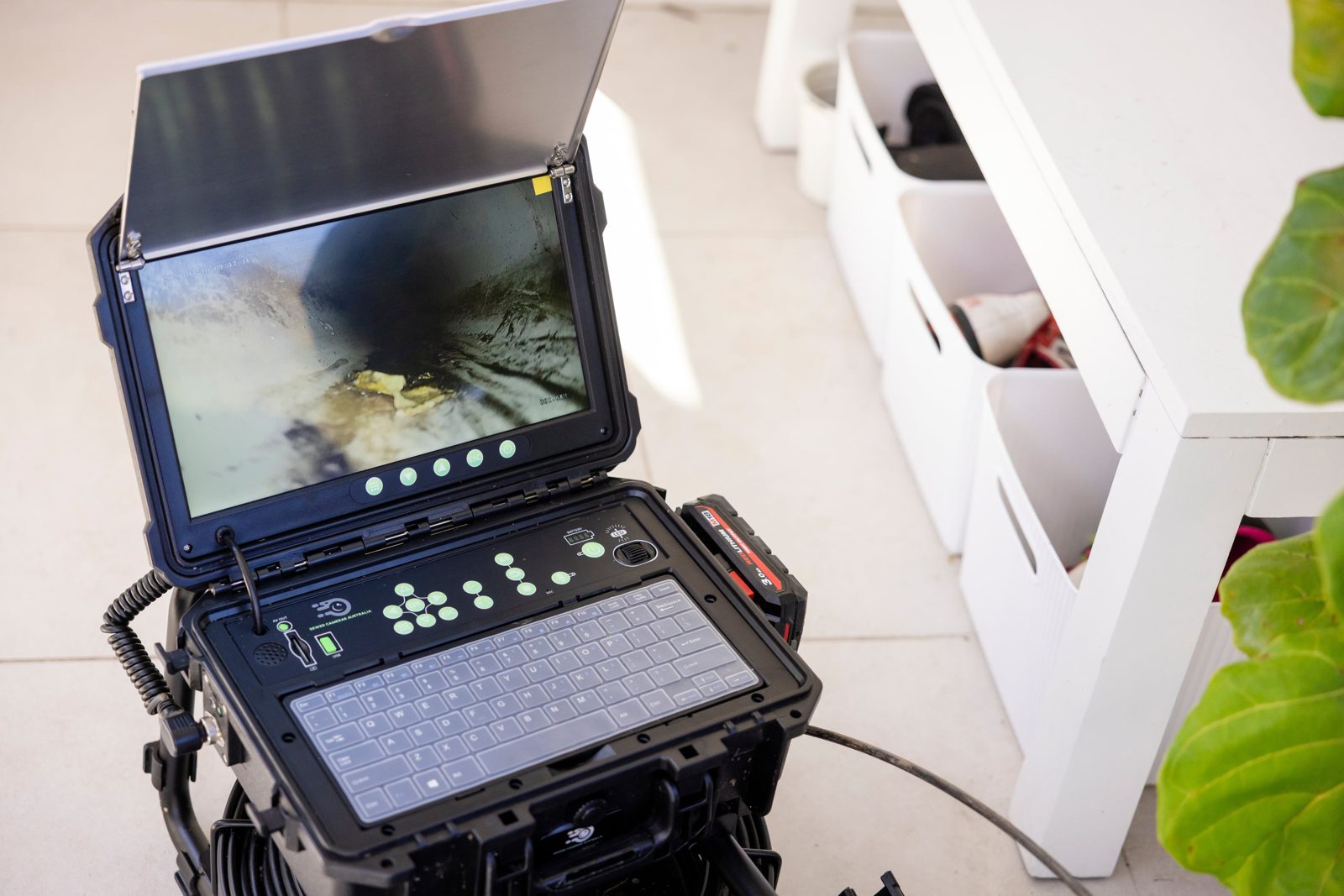
Our team is based in Killarney Vale, so we are close by when a drain backs up. Every blocked drain job follows the same three steps:
- Find it. We run a CCTV drain camera down the line to see what is causing the blockage and exactly where it is.
- Clear it. High-pressure water jetting cuts through roots, grease and wipes and flushes the pipe clean. For some blockages we use an electric eel. See our blocked drain clearing service.
- Fix it for good. If the camera shows cracked or root-damaged pipe, pipe relining can seal it from the inside, often without digging up your yard. Learn more in what is pipe relining.
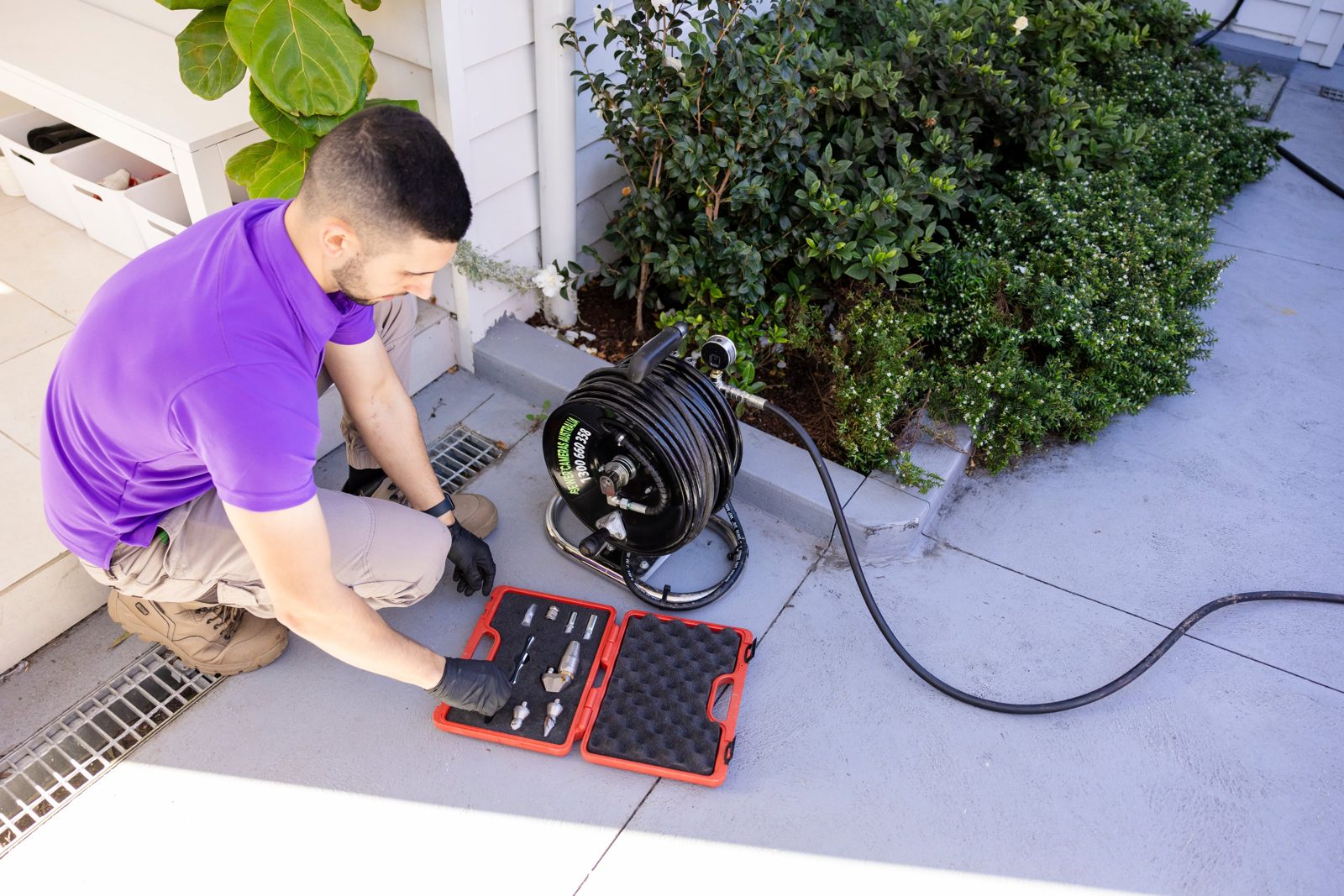
We are licensed plumbers and gasfitters (licence number 463165C) with a $0 call out fee, and we quote before we start, so there are no surprises. That is how we have earned 241 five-star Google reviews from locals.
How to stop your drains blocking again
- Bin wipes, sanitary items and cotton buds, even the “flushable” ones
- Scrape plates and wipe greasy pans before washing up
- Fit hair catchers in showers and basins
- Clean gutters and outdoor grates before storm season
- Plant new trees well away from your sewer line
- Book a drain camera check if your home has original clay pipes and big trees nearby
A quick camera check now is far less hassle than a sewage overflow in the backyard later.
Blocked drain FAQs
Tree roots in older clay sewer pipes cause most of the serious blockages we see in Killarney Vale. Wet wipes, kitchen grease and leaves or sand in stormwater drains are the next most common causes.
Property owners are responsible for sewer blockages on their own property, between the house and the junction where the line joins the Council sewer. Blockages in the Council sewer main are Central Coast Council’s responsibility and can be reported on 02 4306 7900.
Yes. High-pressure water jetting cuts roots out of the pipe, and pipe relining can seal the damaged section from the inside so roots cannot get back in, usually without digging up your yard.
Usually because the pipe itself is damaged, for example roots growing back through a cracked joint or a sagging section where waste collects. A CCTV drain camera inspection finds the real cause so it can be fixed properly.
We do not recommend them. Caustic drain cleaners can damage older pipes and rarely clear roots or wipes. Use a plunger for simple blockages and call a licensed plumber if the drain keeps blocking.
Need a blocked drain cleared in Killarney Vale?
Call Miracle Plumbing & Drains on 0414 259 179 or request a free quote online. We are your local Killarney Vale plumber, and we also look after nearby Bateau Bay, Long Jetty, Berkeley Vale and The Entrance, plus the rest of the Central Coast.